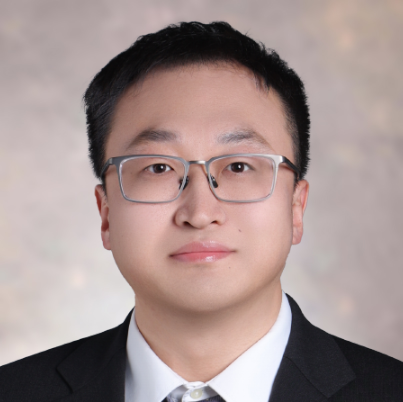
刘磊
联系方式:leiliu@cpl.ac.cn
教育经历
2010-2014,日本滋贺医科大学,整合医学科学,博士
2004-2009,哈尔滨医科大学,临床医学,学士
工作经历
2026-至今, 昌平实验室,领衔科学家
2025-2026,美国哈佛医学院,神经内科副教授
2021-2025,美国哈佛医学院,神经内科助理教授
2019-2021,美国哈佛医学院,神经内科讲师
2016-2019,美国哈佛医学院,博士后
2014-2016,日本滋贺医科大学,特任助理教授
2009-2010,日本滋贺医科大学,客座研究员
研究简介
长期专注于阿尔茨海默病及相关神经退行性疾病的基础与转化研究,围绕疾病发生发展的关键分子机制、体液生物标志物开发以及疾病修饰治疗策略开展系统性工作。研究重点包括γ-分泌酶及其调控机制、淀粉样蛋白和tau蛋白病理、生物标志物在早期诊断与病程分层中的应用,以及抗体、小分子等新型干预手段的开发与评价。致力于从神经退行性疾病的核心病理过程出发,结合分子生物学、生物化学、神经病理学和临床样本研究,推动对疾病机制的深入理解,并促进基础发现向诊断技术和治疗产品的转化应用。
近年主要研究成果包括:
1)在阿尔兹海默症研究领域,在Jama Neurology, Alzheimer’s & Dementia, Nature Communications等期刊上以第一作者/通讯作者发表论文十余篇;
2)围绕阿尔茨海默病分子诊断与干预相关技术,已完成多项专利申请及专利优先权布局,涵盖诊断试剂、抗体分子及相关技术方法。
3)独立设计并开发多个用于阿尔茨海默病分子诊断的关键抗体,具备良好的特异性、灵敏度和转化应用潜力,相关成果已授权给生物技术公司,推动了科研成果的产业化应用。
主要荣誉
1. 2013年,日本滋贺医科大学若鮎賞。
2. 2014年,日本认知症学会最佳基础研究奖。
3. 2014年,日本滋贺医科大学最佳博士论文奖。
4. 2015年,日本武田科学振兴财团医学研究奖励基金。
5. 2018年,哈佛医学院Rappaport阿尔茨海默病研究学者。
6. 2025年,深圳市南山区政府北美生物医药专项赛二等奖。
7. 2025年,深圳市南山区政府“创业之星”全球大赛三等奖。
代表性成果
1. Liu, L., Yu, L., Petyuk, V. A., Kapasi, A., Yoo, H. B., Saba, A., Yang, H.-S., Chhatwal, J. P., & Bennet, D. A. (2026). Association of Aβ monomers with cerebral amyloid angiopathy in brains without parenchymal Aβ deposition. Brain Communications, fcag 051.
2. Meade, J., Mesa, H., Alamgir, S., Bieniecka, I., Liu, L., & Zhang, Q. (2026). Synaptic toxicity of OGA inhibitors and the failure of ceperognastat. The Journal of Prevention of Alzheimer’s Disease, 100456.
3. Liu, L., Saba, A., Pascual, J. R., Miller, M. B., Hennessey, E. L., Lott, I. T., Brickman, A. M., Wilcock, D. M., Harp, J. P., Schmitt, F. A., Selkoe, D. J., Chhatwal, J. P., & Head, E. (2024). Lecanemab and Vascular-Amyloid Deposition in Brains of People With Down Syndrome. JAMA Neurology.
4. Liu, L., Schultz, S. A., Saba, A., Yang, H.-S., Li, A., Selkoe, D. J., & Chhatwal, J. P. (2024). The pathogenicity of PSEN2 variants is tied to Aβ production and homology to PSEN1. Alzheimer’s & Dementia.
5. Bellier, J., Cai, Y., Alam, S. M., Wiederhold, T., Aiello, A., Vogelgsang, J. S., Berretta, S., Chhatwal, J. P., Selkoe, D. J., & Liu, L. (2024). Uncovering elevated tau TPP motif phosphorylation in the brain of Alzheimer’s disease patients. Alzheimer’s & Dementia, 20(3), 1573–1585.
6. Bellier, J., Román Viera, A. M., Christiano, C., Anzai, J. A. U., Moreno, S., Campbell, E. C., Godwin, L., Li, A., Chen, A. Y., Alam, S. M., Saba, A., Yoo, H. B., Yang, H., Chhatwal, J. P., Selkoe, D. J., & Liu, L. (2024). Identification of fibrinogen as a plasma protein binding partner for lecanemab biosimilar IgG. Annals of Clinical and Translational Neurology, 11(12), 3192–3204.
7. Liu, L., Kwak, H., Lawton, T. L., Jin, S., Meunier, A. L., Dang, Y., Ostaszewski, B., Pietras, A. C., Stern, A. M., & Selkoe, D. J. (2022). An ultra‐sensitive immunoassay detects and quantifies soluble Aβ oligomers in human plasma. Alzheimer’s & Dementia, 18(6), 1186–1202.
8. Liu, L., Lauro, B. M., Wolfe, M. S., & Selkoe, D. J. (2021). Hydrophilic loop 1 of Presenilin-1 and the APP GxxxG transmembrane motif regulate γ-secretase function in generating Alzheimer-causing Aβ peptides. Journal of Biological Chemistry, 296, 100393.
9. Liu, L., Ding, L., Rovere, M., Wolfe, M. S., & Selkoe, D. J. (2019). A cellular complex of BACE1 and γ-secretase sequentially generates Aβ from its full-length precursor. Journal of Cell Biology, 218(2), 644–663.
10. Liu, L., Lauro, B. M., Ding, L., Rovere, M., Wolfe, M. S., & Selkoe, D. J. (2019). Multiple BACE1 inhibitors abnormally increase the BACE1 protein level in neurons by prolonging its half‐life. Alzheimer’s & Dementia, 15(9), 1183–1194.