Alzheimer's and Parkinson's Researcher Jintai Yu Speaks at Changping Laboratory on Big-Data-Driven Precision Medicine
2025-12-18
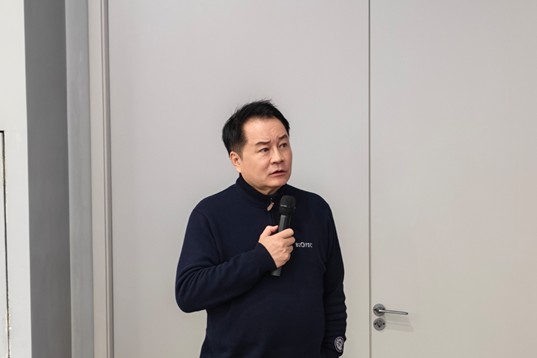
Professor Jintai Yu of Huashan Hospital, Fudan University, delivered a talk at Changping Laboratory on December 16, 2025, on big-data-driven precision medicine for neurodegenerative diseases. The seminar, titled "Big-Data Driven Precision Medicine for Neurodegenerative Diseases," was hosted by Laboratory Director Xiaoliang Sunney Xie.
About the Speaker
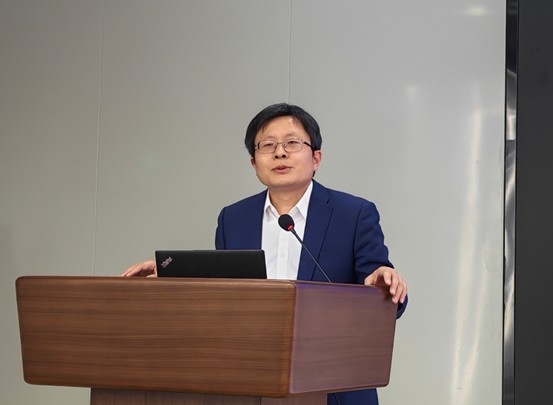
Jintai Yu is a Chief Physician at Huashan Hospital of Fudan University, Deputy Director of the Institute of Science and Technology at Fudan University, and the lead for the cognitive disorders program at the National Center for Neurological Disorders (Huashan). His long-term clinical and research focus is the prevention, diagnosis, and treatment of neurodegenerative diseases, particularly Alzheimer's disease and Parkinson's disease.
Why It Matters
Alzheimer's disease (AD) and Parkinson's disease (PD) are the most common neurodegenerative disorders. China has an estimated 10 million patients with AD dementia and 5 million with PD, and these numbers continue to rise, doubling roughly every 20 years. The two diseases have become a major threat to brain health in the aging population.
What He Talked About
Professor Yu gave a systematic account of how his team uses an innovative research paradigm — combining artificial intelligence, multi-omics big data, and multidisciplinary approaches — to address the challenges posed by AD, PD, and other neurodegenerative diseases.
Working from large-scale longitudinal cohorts, his team has been advancing precision medicine research across the full clinical chain of prevention, diagnosis, and treatment.
Prevention and diagnosis. In earlier work, the team analyzed data from more than 50,000 individuals to map a systematic human plasma proteome–phenome atlas. This work identified novel modifiable risk factors for disease and produced high-accuracy prediction models, providing powerful biomarker tools for early risk identification in neurodegenerative diseases.
Therapeutic target discovery and translation. This paradigm has also yielded breakthrough results in identifying new treatment targets. Professor Yu focused in particular on his Parkinson's disease research. Through deep mining of multi-omics data, his team was the first in the world to discover and validate FAM171A2 as a highly promising novel therapeutic target. Building on this finding, they screened small-molecule drug candidates with the potential to block pathological progression in the early stages of the disease, and are actively pursuing clinical translation. Professor Yu emphasized that this work demonstrates a complete innovation chain — from big-data association to causal mechanism validation to drug discovery — and offers a new direction for addressing the lack of effective treatments for most neurodegenerative diseases.
Q&A
The seminar drew scientists, researchers, and students working in brain science, neurodegenerative disease, artificial intelligence, and immunology. In the discussion that followed, Professor Yu and the audience explored topics including the effectiveness of using single indicators to predict AD and PD, the interpretation of non-coding region mutations discovered through genome-wide association studies (GWAS), the binding mode between FAM171A2 and α-synuclein (α-syn) monomers, and the downstream molecular signaling pathways of FAM171A2 in disease onset and progression.
The Changping Laboratory Academic Seminar Series brings leading scientists from China and abroad to the Laboratory for focused talks on topics at the frontier of life science research. The series provides a high-level platform for regular academic exchange, supporting the Laboratory's effort to build a world-class hub for life science innovation.