Alzheimer's Researcher Lei Liu Speaks at Changping Laboratory on the Amyloid Hypothesis and Disease-Modifying Therapies
2025-11-29
Associate Professor Lei Liu of Brigham and Women's Hospital, Harvard Medical School, delivered a talk at Changping Laboratory on October 27, 2025, on the amyloid hypothesis and the development of disease-modifying therapies for Alzheimer's disease. The seminar, titled "Amyloid Hypothesis and Disease Modifying Therapies Development of Alzheimer's Disease," was hosted by Deputy Laboratory Director Feng Shao.

About the Speaker
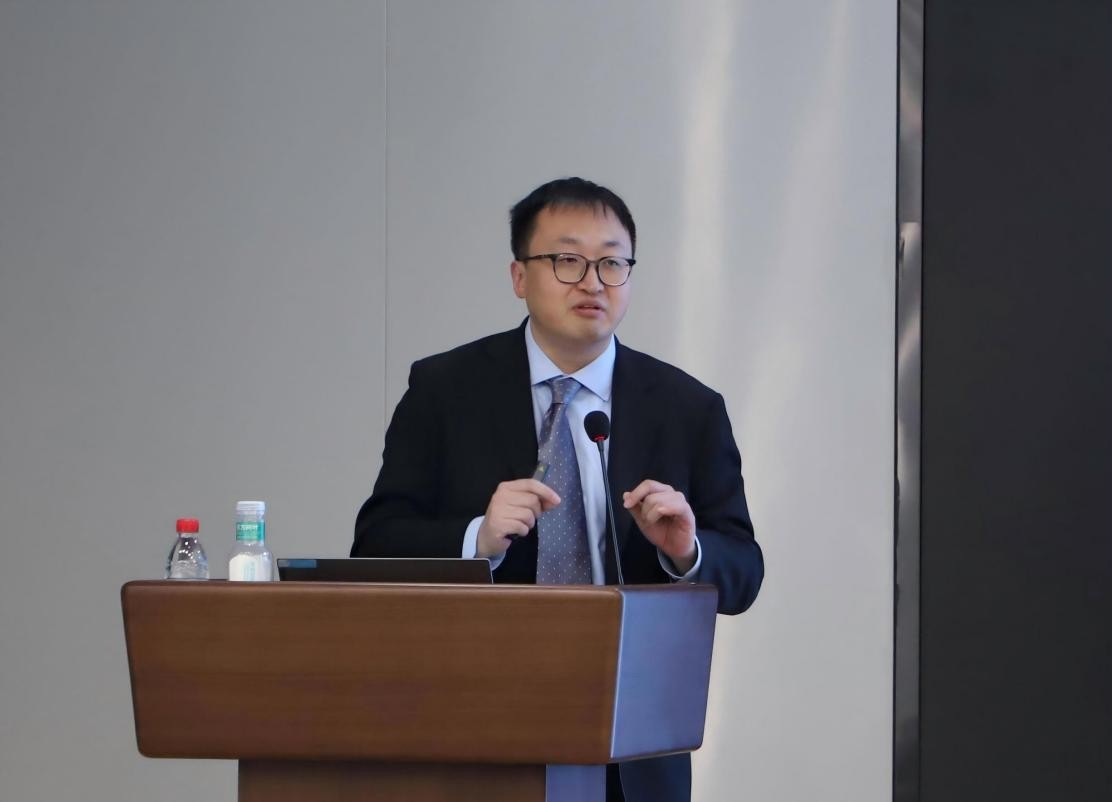
Lei Liu is an Associate Professor of Neurology at Brigham and Women's Hospital, affiliated with Harvard Medical School. He serves as a scientific and consulting advisor to more than 20 biotechnology, pharmaceutical, and investment firms, and is the co-founder of three companies: NanoAffinity, Veritas Unilabs, and ModuMind Therapeutics. The Liu Lab studies the mechanisms of anti-amyloid immunotherapy in Alzheimer's disease and Down syndrome-associated dementia, the biochemical abnormalities of tau protein in various tauopathies, and the cellular mechanisms of tau secretion. His team is developing next-generation disease-modifying therapies based on antibodies, small molecules, and RNA editing technologies, and collaborates with local and international clinical cohorts to advance biomarker-guided translational research.
Why It Matters
Alzheimer's disease (AD) is a neurodegenerative disorder of the central nervous system and the most common form of dementia in the elderly. It occurs primarily in old age or pre-senile stages, with the risk of onset increasing with age. The amyloid hypothesis, proposed in the 1990s, is one of the most influential etiological theories in the AD field. It holds that the accumulation of amyloid-beta (Aβ) in the brain triggers a cascade of events — including tau pathology, neuroinflammation, and neuronal loss — that ultimately leads to cognitive impairment and behavioral deterioration. The development of disease-modifying therapies (DMTs) has largely been guided by this hypothesis, aiming to intervene in core AD pathological mechanisms to slow or halt disease progression. DMTs mainly fall into two categories: those targeting Aβ production and those targeting Aβ clearance. Representative drug classes include γ-secretase modulators, β-secretase inhibitors, and anti-Aβ monoclonal antibodies.
What He Talked About
"Long-chain" Aβ proteins such as Aβ42 and Aβ43, which are prone to aggregation and difficult to clear, are the primary drivers of AD. Pathogenic mutations in the autosomal genes APP, PS1, and PS2 bias γ-secretase processing toward generating these harmful long-chain Aβ peptides. The Liu team discovered the correlations between genotype, γ-secretase activity, and AD disease phenotype. Based on this finding, they successfully designed a novel class of oral γ-secretase modulators that safely shift γ-secretase activity toward producing shorter peptides — Aβ37 and Aβ38. These shorter peptides are more soluble, less prone to aggregation, and cause less damage to the brain.
Beyond blocking the production of harmful proteins, clearing Aβ deposits that have already formed in the brain is also key to treating Alzheimer's disease. Anti-amyloid immunotherapy uses antibody drugs to recognize and clear Aβ deposits. However, these antibody drugs face challenges including high required dosages and significant risk of adverse reactions. To address this, the Liu team developed proprietary analytical methods and established the first human-benchmarked parallel experimental system, through which they investigated and revealed the molecular mechanisms underlying both the "efficacy" and "toxicity" of these antibody drugs. They discovered the clinical advantages of antibodies with low plasma protein binding rates — a finding that can serve as an important basis for optimizing antibody design. At the same time, the team built a novel antibody development platform capable of producing high-affinity, non-immunogenic molecules that achieve high efficacy at low doses, addressing the low efficiency of traditional antibody screening platforms.
Looking ahead, Dr. Liu noted that the focus of future anti-Aβ antibody development will likely shift toward biomarkers. By further mining the clinical value of biomarkers, researchers can provide stronger support for the precise application of anti-Aβ antibody drugs, advancing Alzheimer's disease treatment toward a new stage of precision and personalized medicine.
Q&A
The seminar drew scientists, researchers, and students working in brain and neurodegenerative disease, oncology and immunotherapy, and artificial intelligence and frontier technologies. In the discussion that followed, Dr. Liu and the audience explored topics including the relationship between γ-secretase activity and aging, the response of immune cells to Aβ, the role of ApoE in Aβ deposition, and future directions for anti-Aβ drug development.
The Changping Laboratory Academic Seminar Series brings leading scientists from China and abroad to the Laboratory for focused talks on topics at the frontier of life science research. The series provides a high-level platform for regular academic exchange, supporting the Laboratory's effort to build a world-class hub for life science innovation.