25 Years of Human Genome International Symposium: Quotes from the Speakers
2026-09-03
25 Years of the Human Genome
The Human Genome Project (HGP) was officially launched in 1990, and the first draft of the human genome sequence was published in February 2001. Twenty-five years later, why do we look back on and pay tribute to this landmark achievement?
On August 24, the international symposium "25 Years of the Human Genome" opened at Changping Laboratory. More than 30 leading scientists from around the world gathered in Beijing to address a fundamental question: "How has genomics changed the world, and where is it headed next?"

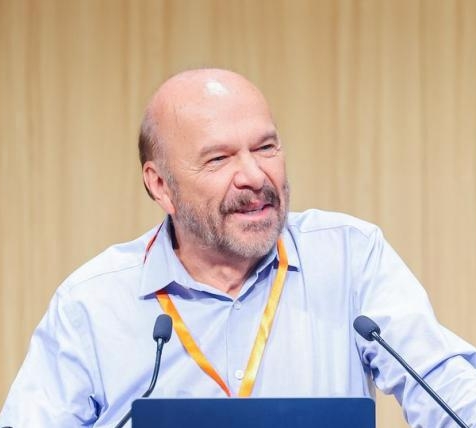
Professor Xiaoliang Sunney Xie
Changping Laboratory
“In hindsight, the Human Genome Project stands alongside the Manhattan Project and the Apollo Program as one of the most successful mega-projects in the history of science.”

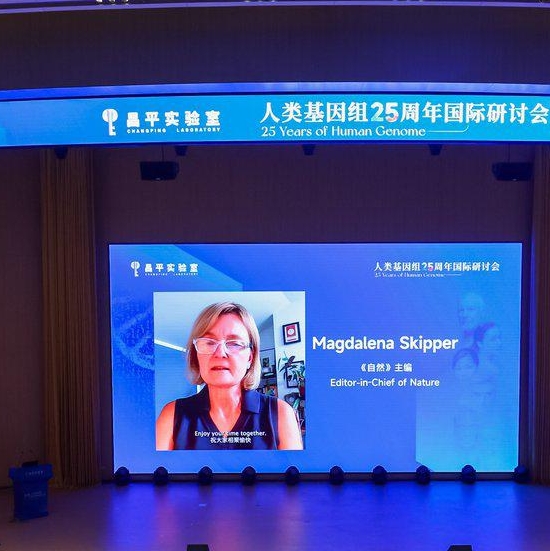
Magdalena Skipper
Nature
“Certain great things are only possible as a result of multi-center international collaborations.”

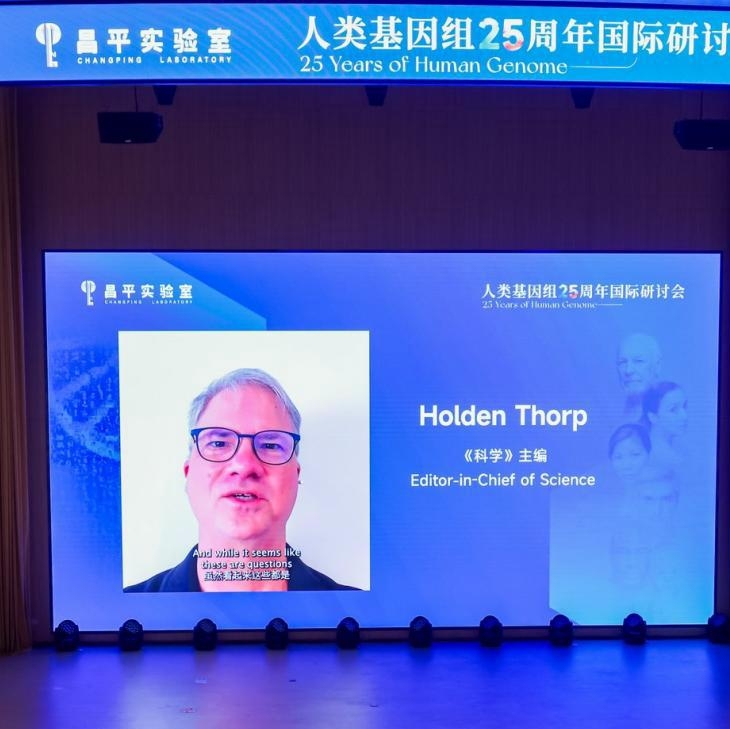
Holden Thorp
Science
“We thought it would answer a lot of questions. It did, but it gave us more questions than answers. They are questions we never would have known about in the first place before the sequence was done.”

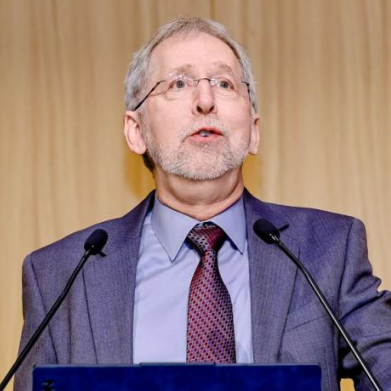
Eric Green
Illumina
Former Director, NHGRI; Core Participant in the HGP
“Probably more accurate to say: We went from taking 6 years to generate the first sequence of the human genome to now sequencing a human genome, on average, every 6 seconds. That is just truly remarkable.”
“It would be more descriptive to say: The Human Genome Project’s finish line in 2003 immediately became the starting line for a journey that is now bringing genomics into medicine.”

Professor Huanming Yang
Founder of BGI, Key Chinese team leader of the HGP
“Owned by all, joined by all, shared by all.”
“If there's any experience that BGI can share, it's not about sharing everything, but about collaboration, collaboration, and more collaboration.”

Professor Dennis Lo
CUHK
“The Human Genome Project has laid the scientific foundation for interpreting cell-free DNA in plasma. Building on this foundation, we have pioneered noninvasive prenatal testing (NIPT), providing a safe and effective prenatal screening solution for pregnant women worldwide.”

Professor Mark Adams
The Jackson Laboratory
“It was a great time to be in genomics. I will say it was a lot of fun, it was a lot of stress.”
“Genomics really is a team science. It takes many perspectives. Find and listen to people who have different perspectives from yours.”

Professor Aristides Patrinos
New York University
Former Director, Office of Biological and Environmental Research, DOE
"I was a friend of both of them. I was aware that they were surrounded by their very loyal colleagues who very much wanted their men to win. I felt that it could have been a disaster if that had happened, calling the outcome a tie, which is what we accomplished showed maturity and led to a celebration rather than an ugly battle."

Professor Jonathan Rothberg
4Catalyzer
“If it saves the life of somebody you love, what matters most isn’t the details of the technology itself, but what the application of that technology can do for people.”
“I completely missed how big single cell genomics would be and how important it would be to science. That was my big surprise.”

Professor Xihong Lin
Harvard
“AI cannot solve all the problems. What we need to do is basically leverage the observed data plus the AI and also plus the statistics in order to accelerate the discovery.”
“So the goal is not to just have a discovery, but this had to be a true discovery.”

Fujian Medical University
“So for most of the cohorts we are currently studying, they are from European populations. We lack Asian data and data from other parts of the world. In the future, I think we need to build a cohort that is fully representative.”

Peter Campbell
“It's not just about prediction. It's about intervention. What we should be thinking about is not just trying to detect cancer, but actually prevent it.”
“Cancer is not the only destination of somatic evolution. Some of this selection may actually protect against cancer.”

Professor Sten Linnarsson
"Curing all disease within 5 or 10 years — I think that's just vastly overhyped. I think it's a bit counterproductive."
“If we have a robot that can walk into the lab, take out reagents from the freezer, unscrew Eppendorf tubes, and run a cell culture experiment successfully — then I think we're there.”

Professor Joseph Ecker
Salk Institute
“Transposable elements look exactly like transcriptome clusters. These are the ancient elements that continue to become part of genes.”

Professor Zemin Zhang
Chongqing Medical University
“Cancer is not one single disease, it's thousands of diseases.”
“Just like the periodic table is fundamental to chemistry, if you want to understand what's going on inside diseased tissue, you need a catalog of all the cell types within the tumor.”

Professor Ting Wang
Washington University in St. Louis
“Despite being extremely high quality and impactful, the current human reference genome has key limitations—it is a fake genome representing a single mosaic haplotype. The human pangenome project is constructing phased, telomere-to-telomere diploid genome assemblies of actual individuals that represent broad human genetic diversity.”
“Human pan genome project, it's also a social science project. Ethical and legal issues are very, very important for us to consider.”

Professor Yanyi Huang
Changping Laboratory / Peking University
“DNA is the information source; the sequencer is the communication channel.”
“Through this journey I have enjoyed both the power of industry-driven engineering and the elegance of basic research.”
“We aim to make cost no longer a barrier for large-scale genomics through consumable reuse and chemical innovation.”

Professor Fuchou Tang
Changping Laboratory / Peking University
“Without the reference genome as a 'coordinate system', single-cell data cannot be accurately interpreted.”
“Single-cell technologies push genomics from tissue averages to single-cell resolution.”

Professor Nadav Ahituv
UCSF
“Non-coding regions are not 'junk', but regulatory switches of disease.”
“We can not only fix genes, but also make cells 'starve' tumors by competing for nutrients.”

Professor Yijun Ruan
Zhejiang University
“3D structure is not a static scaffold, but a dynamic platform for transcriptional regulation.”
“Distant genes located within the nearby regions are not really transcribed independently; instead, they actually often can be clustered together in a proximity of spatial space, therefore providing the structural basis for coordinated transcription.”

Professor Tian Xu
Westlake University
“AI is underestimated. It's going to dramatically change everything. The underestimated part is creativity.”

Dr. Xun Xu
BGI
“The Chinese population genomic data completes a critical puzzle piece of global genomic diversity.”

Dr. Xiaole Liu
GV20 Therapeutics
“Inside every tumor lies the weapons to defeat it.”
“We use AI to harvest nature's engineering wonders. Instead of looking at a quintillion-size haystack, we just need to use AI to sort a curated short list.”

Professor Peter Koo
Cold Spring Harbor Laboratory
“Understanding the cell and how the genome controls it, I would say, is the ultimate black box.”

Professor Yunlong Cao
Changping Laboratory / Peking University
“The performance of cancer early screening technologies will undoubtedly be refined as data continues to accumulate. However, to advance population-level early cancer screening at the populational level, the health economics must be carefully calculated.”

Professor Mingchen Chen
Changping Laboratory
“With innovative experimental high throughput technique developed at CPL, we are able to design Al to explore the understudied transcription factors.”
“The low quality data is also useful, but depending on the way how we use it.”

Dr. Sijia Lu
Yikon Genomics
"From 0 to 1 is more about technology, clinical needs, and close collaboration with the clinical side. However, from 1 to 10 or from 10 to 100 is more about criteria and regulation. Each country has different regulations and environments, so technology must be localized to succeed."
“We need to treat regulation as a friend, not as someone that's trying to prevent us from doing things. Without regulation, no technology can go to scale.”
Looking back over the past 25 years, genomics has transformed our lives and profoundly changed the way we understand life. Yet the memorable insights shared by speakers remind us of one thing: the most exciting chapters are still ahead.